
Critical Thinking and Decision Making
The Paradox of Process and Speed

In last week’s article, I introduced the concept of being a “time billionaire.” The take-away being that you should take as much control of how your time is managed and used. This requires diligence, discipline, and patience. Getting this consistently wrong puts you in a position where your ability to make timely and effective decisions is challenged. When everyone needs a “minute” and you are constantly reachable, you lack both the benefit of process and the ability to slow down the clock. As LTC Danny McKnight, protrayed by Tom Sizemore, in BlackHawk Down so eloquently put it:

Kahneman and Sunstein
Behavioral Economics combines elements of psychology and economics to explain how and why people behave the way they do in the real world. Pioneers in the field include Daniel Kahneman, Amos Tversky, Richard Thaler, and Cass Sunstein. These economists took the concept of the rational actor and how she should behave in uncertainty and scarcity a step further. Through numerous experiments, they proved that a rational actor wasn’t so rational after all. An individual’s ability to apply critical thinking to decision making is flawed.
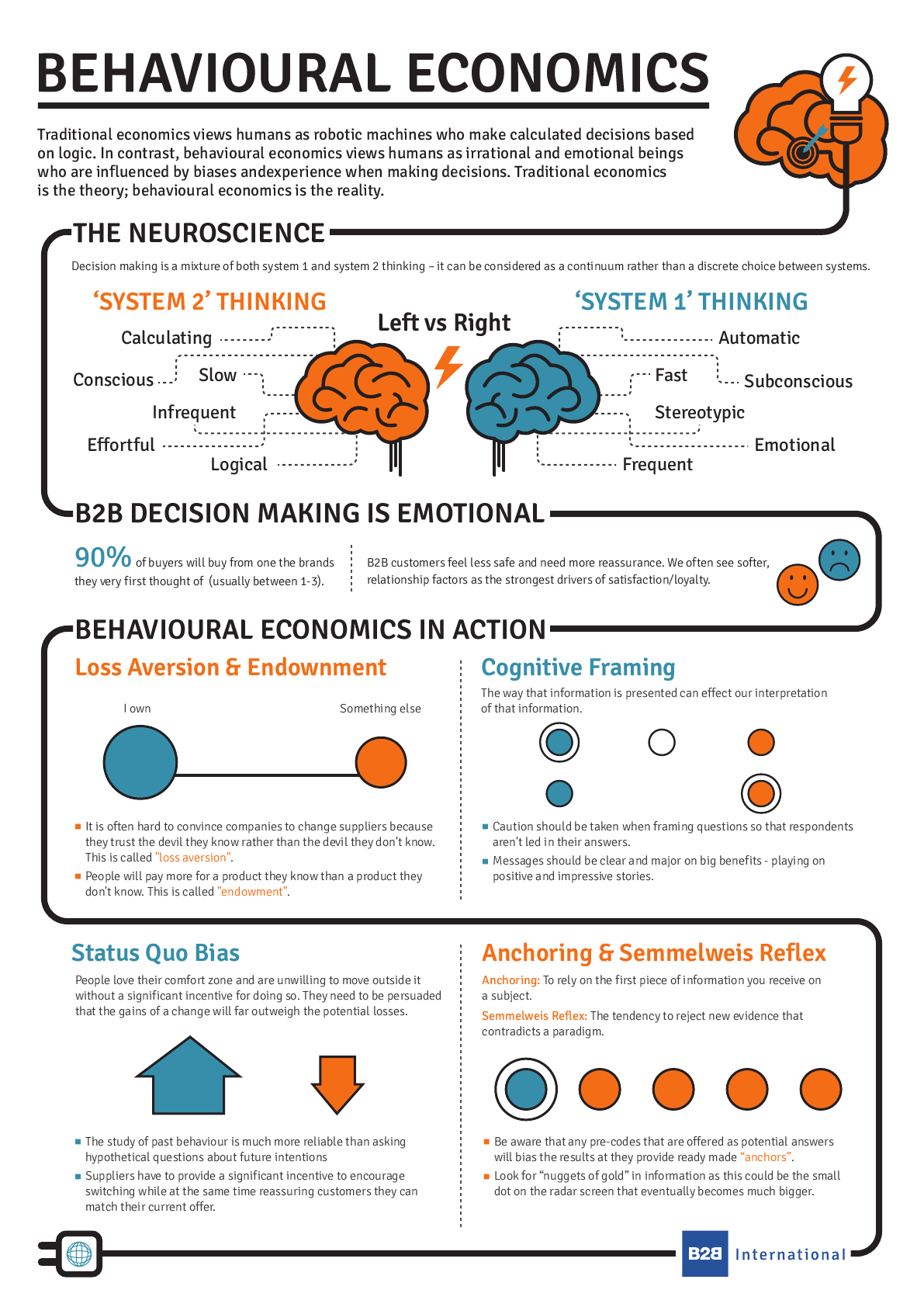
Critical thinking is an important skill that allows individuals to analyze information and make well-informed decisions. It involves the ability to think critically about arguments and evidence presented, identify potential biases, evaluate the credibility of sources, and consider alternative perspectives.
In terms of decision-making, this is a process of choosing between different options or courses of action based on an assessment of the potential outcomes and consequences. Decision-making can be influenced by many factors such as personal biases, emotions, and cognitive limitations.
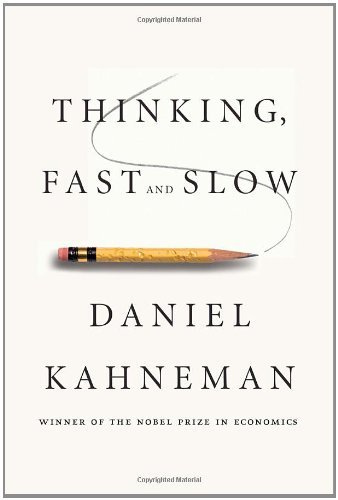
Daniel Khaneman's Thinking Fast and Slow is a book that explores the way we think and make decisions. The book covers two modes of thinking: System 1 and System 2. System 1 thinking refers to the automatic, intuitive, and fast-thinking that occurs without much conscious effort. System 2 thinking, on the other hand, involves deliberate and analytical thinking that requires effort and attention.
Kahneman argues that System 1 thinking, while efficient and useful in many situations, can also lead to errors and biases. This mode of thinking relies on mental shortcuts and can be influenced by emotional states, making it prone to errors and biases. In contrast, System 2 thinking is slower and more deliberate, but less susceptible to biases.
There are several practical steps that individuals and organizations can take to reduce the impact of system 1 and 2 thinking on decision making. These include:
1. Recognizing biases: Understanding common cognitive biases such as confirmation bias, availability bias, and anchoring bias can help individuals and organizations recognize when they are relying too heavily on system 1 thinking.
2. Emphasizing analytical thinking: Encouraging analytical thinking can help individuals and organizations move away from system 1 thinking and toward a more deliberate, thoughtful approach to decision-making.
3. Creating decision-making frameworks: Developing decision-making frameworks that emphasize evidence-based analysis and critical thinking can help reduce the impact of system 1 thinking.
4. Encouraging diversity of thought: Encouraging diverse perspectives and inviting dissenting opinions can help reduce the impact of system 1 thinking by promoting more thoughtful, nuanced decision-making.
5. Using decision support tools: Decision support tools such as simulation models or scenario planning can help reduce the impact of system 1 thinking by providing structured approaches to decision-making.
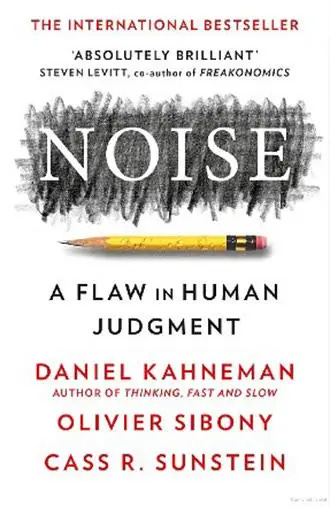
Cass Sunstein’s Noise is another interesting perspective on decision-making. Sustein argues that noise, or random variation in decision-making, can have a significant impact on the quality of decisions made. He suggests that excessive noise can lead to inconsistencies and poor-quality decisions. Sunstein believes that reducing noise requires a systematic approach that involves identifying sources of noise, gathering data, and implementing solutions to reduce variability.
There are several practical steps that individuals and organizations can take to reduce the impact of noise on decision-making. These include:
1. Standardizing decision-making processes: By establishing clear procedures for making decisions, organizations can help eliminate random variations in decision-making.
2. Collecting more data: Gathering additional data can help reduce noise by providing a clearer picture of the underlying factors that influence decisions.
3. Using decision aids: Decision aids such as checklists or decision trees can help reduce noise by providing a structured approach to decision-making.
4. Training and education: Providing training and education on critical thinking and decision-making can help individuals and organizations understand the potential impact of noise and biases on decision-making.
5. Continuous improvement: Continuously reviewing and evaluating decision-making processes can help identify sources of noise and opportunities for improvement.
Overall, both Thinking Fast and Slow and Noise highlight the importance of critical thinking and decision-making skills. By understanding the limitations of our cognitive processes and being aware of potential biases and noise, we can make more rational and informed decisions.
Process and Speed
There is another paradox at play here as leaders work hard to make the best decisions with what may or may not be the best data presented.
In one breath, deliberate process with proven metrics that are focused on objectives and key results tied to clearly defined goals provides the necessary rigor to making sound decisions.
Yet, in the next, the process associated with doing just that becomes slow, cumbersome, and entrenched. And despite the best efforts of leaders and managers to do the detailed work, we are still faced with critical thinking challenges posed by system 1 and 2 thought processes that may yield a poor outcome.
What do we do?
Executives can encourage awareness of these challenges by:
1. Encouraging open communication: Executives must encourage open communication and feedback within their teams, so that individuals feel comfortable expressing their opinions and raising concerns about potential biases or flawed decision-making processes.
2. Leading by example: Executives must set an example for their teams by demonstrating a commitment to thoughtful, evidence-based decision-making and encouraging others to do the same.
3. Regularly assessing decision-making processes: Executives must regularly assess their organization's decision-making processes to identify areas for improvement and make adjustments as needed.
Conclusion
It’s one thing to recognize these challenges in your own leadership approach. It’s completely another to be able to do something about it. When does it start costing you and your team valuable time and resources?
You probably already sense it. It’s time for the weekly stand-up, the team is gathered and you start running through the material. Inevitably, you get hung up in the same spots, on the same charts. You get pulled into some critical thinking trap based upon noisy data and the 30min meeting turns into 1:30min. Group dynamics take over and the rest of the day is clobbered as you play catch up.
The solution lies in elevating the power of the individual leader, improving the dynamics of the team, and measuring the right things, in the right ways, for the right reasons.
============================================================================
I love writing about these topics and sharing these insights with the readers of Modulated. I hope these pieces contribute to building a community of leaders, experienced and growing alike, to think differently about the challenges they face.
Find me on LinkedIn at William Shafley or at Leonard Lyon Solutions
We HAVE to connect for a long form podcast on this. I have seen SO MANY failures in M&A for exactly the reasons you outline above. The sad part is that leaders don’t even know they are making them - which is the most insidious part. And I use the Tom Sizemore quote all the time! I (in a highly polite manner) tell people they can have 2 minutes or 15 minutes but nothing takes 5 minutes.